Carry the Load
Groceries from the car, a laundry basket carried to the bedroom, a stack of books delivered to the shelf. Best moment: after school, built into chores.

Proprioceptive activities help kids feel grounded, calm, and focused. An OT's guide to heavy work ideas by age and setting — home, classroom, playground, and desk.

Shoshi Tau
Founder & CEO
Posted on November 17, 2026
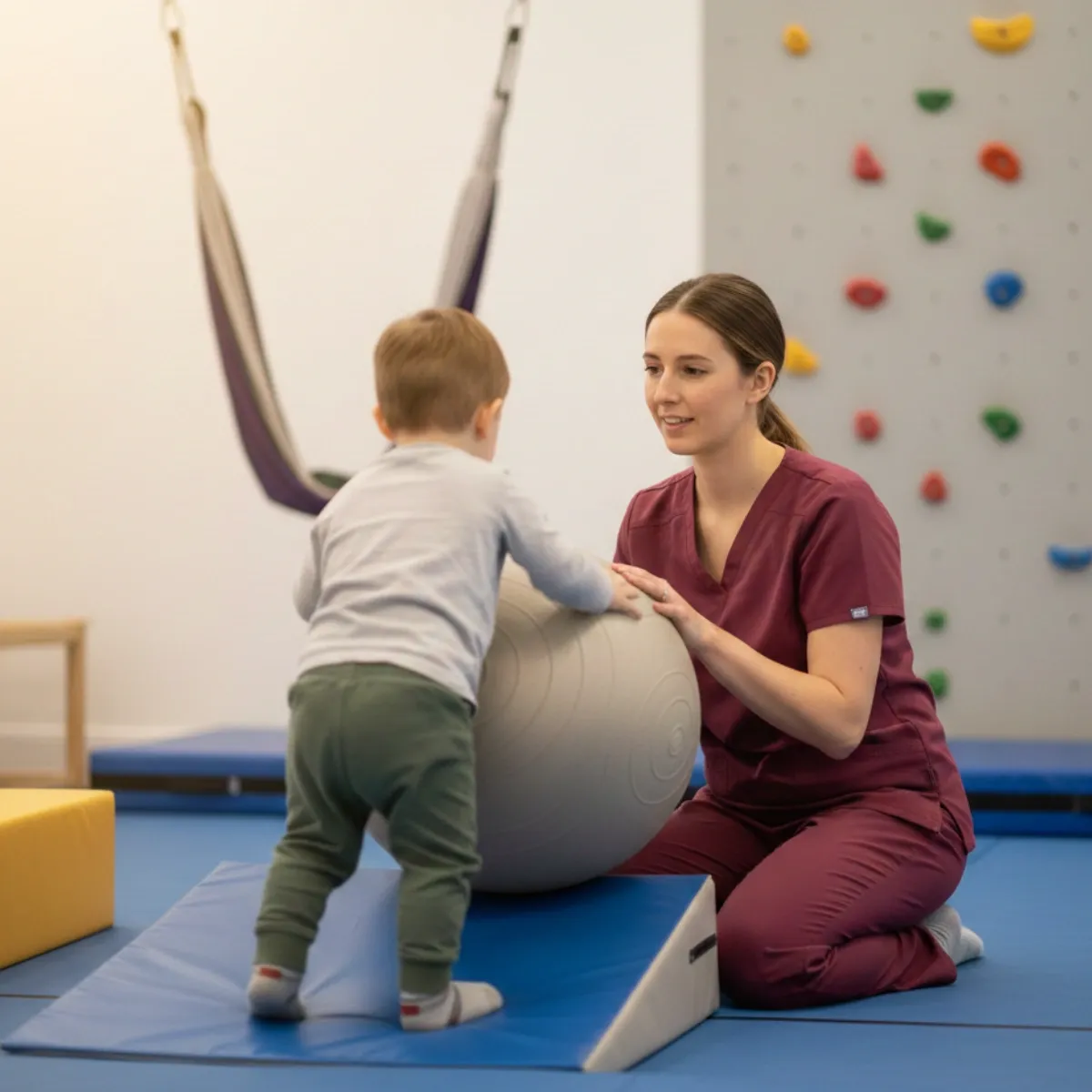
Proprioceptive activities are movements that push, pull, lift, carry, or squeeze — anything that makes muscles and joints work against resistance. They feed the brain a clear map of where the body is, and for many children that input is the fastest route to feeling calm, organized, and ready to focus.
If your child crashes into furniture, chews on everything, hugs too hard, or seems to be in constant motion, you have probably already met proprioception — you just didn't have the word for it. This guide explains what it is, how to spot a child who needs more of it, and the activities occupational therapists actually recommend, organized by age and by where your child spends the day.
Proprioception is your body's position sense. Receptors in your muscles, joints, and tendons constantly report where each body part is and how much force it's using — which is how you can touch your nose with your eyes closed, climb stairs without watching your feet, or hold a paper cup without crushing it.
Children are still calibrating this system. When the signals come through clearly, a child feels grounded in their own body. When the signals are fuzzy, kids tend to do one of two things: seek more input (bigger movements, harder crashes, tighter squeezes) or miss input they need (clumsiness, poor force control, slumping, constant fidgeting to "wake up" the system).
Proprioceptive activities are simply deliberate ways to send strong, clear signals through that system.
Almost. Proprioception is the sense; heavy work is the delivery method. Occupational therapists use "heavy work" for any activity where the body pushes, pulls, lifts, carries, or takes impact — carrying groceries, pushing a loaded wagon, climbing, kneading dough. Heavy work is the most reliable way to give a child proprioceptive input, which is why the two terms travel together. In this guide, the activity lists are heavy work lists.
Every child seeks movement. The signs below matter when they're intense, constant, or getting in the way of daily life:
Seeking signs — your child hunts for input:
Under-responsive signs — your child's system runs quiet:
One or two signs are just childhood. A pattern across settings — home and school — is worth a closer look (see "When to Talk to an Occupational Therapist" below).
Pick two or three activities from the setting your child is in, and use them before the hard moment — before homework, before a long car ride, before the wiggles peak — not as a reaction after.
Groceries from the car, a laundry basket carried to the bedroom, a stack of books delivered to the shelf. Best moment: after school, built into chores.
A box of toys pushed across the floor, a loaded wagon, helping move a chair. Best moment: before homework or dinner.
Bear walk, crab walk, frog jumps down the hallway. Best moment: morning wake-up and energy breaks.
Kneading dough, stirring thick batter, rolling out playdough or clay. Best moment: cooking together, rainy afternoons.
Jumping into a pile of cushions, rolling up snugly in a blanket (the “burrito roll”), gentle cushion “sandwich” presses. Best moment: wind-down time, when seeking peaks.
Hands flat on the wall, 10 slow push-ups. Best moment: anywhere, anytime — the 60-second reset.
Stacking chairs, carrying the book bin to the library, wiping tables. Best moment: start and end of day — helps the whole class and singles nobody out.
Carrying a stack of books or a ream of paper to another classroom. Best moment: before long seated work.
Hands on the seat, lift the body, hold for a count of 10. Best moment: at the desk, between tasks.
Kicking and stretching against a band looped around the front chair legs. Best moment: during seated work.
A quick set of wall push-ups on the way back from the bathroom or water fountain. Best moment: transitions.
Playground structures, climbing walls, monkey bars — one of the richest proprioceptive activities there is. Best moment: free play.
Digging in sand or garden, raking, pushing a wheelbarrow, carrying a watering can. Best moment: weekend family time.
With a rope, a towel, or a stretchy band. Best moment: playdates and PE.
Pushing, not just swinging — the push is the heavy work. Best moment: playground visits.
A grown-up holds the child's ankles while they walk on their hands. Short bursts — a few meters is plenty.
Squeeze, pull, and pinch for 1–3 minutes. Best moment: right before handwriting.
Palms pressed hard together, or pushing down on the desk to “grow tall.” Best moment: an invisible reset during class or homework.
A chewable pencil topper or a crunchy snack (carrots, pretzels) — chewing is proprioception through the jaw. Best moment: homework and long car rides.
A water bottle and books add up — keep it sensible, not maximal. Best moment: walking to class and errands.
The activities stay similar across childhood; what changes is the dose, the independence, and how "grown-up" the job looks.
Focus: safe, supervised pushing, pulling, and climbing, with lots of floor play. Examples: pushing a loaded toy stroller or box, carrying a small bag of toys, crawling through tunnels, climbing onto cushions.
Focus: animal walks, playground climbing, and helping jobs with real weight. Examples: bear and crab walks, wheelbarrow walks, carrying the watering can, digging, crash piles.
Focus: classroom jobs, sports, and chores with genuine resistance, plus desk strategies for focus. Examples: stacking chairs, swimming, martial arts, bike riding, carrying groceries, theraputty before writing.
Focus: input that looks like fitness and responsibility, not “therapy.” Examples: supervised strength training, rock climbing, yard work, moving furniture, a part-time job with physical tasks.
Proprioceptive input works best in short bouts sprinkled through the day rather than one long session:
For children with ADHD specifically — where the movement craving is often proprioceptive hunger — our companion guide goes deeper: sensory activities for hyperactive kids.
Activities like these help most children. Consider an OT evaluation when:
An evaluation doesn't commit you to therapy — it gives you a map of your child's sensory system and a plan matched to it, instead of trial and error. Our sensory processing OT program in Coral Springs starts with exactly that evaluation, and our therapists build home and school strategies into every plan.
Proprioceptive activities are movements that make muscles and joints work against resistance — pushing, pulling, lifting, carrying, climbing, squeezing, and jumping. They send the brain clear information about where the body is, which helps many children feel calm, grounded, and focused.
Proprioception is the sense — the body's position-and-force awareness. Heavy work is the set of activities that deliver strong proprioceptive input. Therapists use the terms together because heavy work is the most practical way to feed the proprioceptive system.
Short bouts of 5–15 minutes, sprinkled through the day, usually work better than one long session. Many families anchor them to routines: before school, before homework, after school, and before bed. A daily pattern woven into chores and play — sometimes called a sensory diet — beats occasional marathon sessions.
For many children, yes. Strong proprioceptive input has an organizing effect on the nervous system, and teachers commonly use classroom jobs, chair push-ups, and heavy errands before seated work. If focus problems persist across settings, an OT evaluation can identify what's driving them.
They provide proprioceptive input, but passively — they're tools, not activities, and they follow specific wearing rules (short windows of 15–20 minutes, weight around 5–10% of body weight). Active heavy work is the foundation; weighted tools are an add-on some children benefit from. Details: our weighted vests guide.
When the signs are intense or constant, show up at both home and school, or interfere with learning, self-care, or family life — or when consistent home strategies aren't producing change. An evaluation gives you a specific plan instead of guesswork.
If you're in Coral Springs or northwest Broward and wondering whether your child's sensory seeking is something more, OTogether's team can help you sort it out. Call us at (954) 508-3430 or learn more about pediatric occupational therapy at OTogether.
Thanks for taking this step for your child. We'll reach out shortly to answer your questions and help you figure out what comes next.